Anji Xielong Furniture Co., Ltd., established in 2019, is a specialized manufacturer integrating the R&D, production, and sales of high-performance adjustable armrests. As a primary accessory shaper in the office furniture sector, the company focuses on the structural precision and mechanical durability of chair components. By adhering to a "quality first" philosophy, Anji Xielong ensures that each 2d adjustable armrest meets the rigorous functional requirements of global furniture brands, facilitating a balance between user comfort and industrial cost-efficiency.
Mechanical Dimensions and Adjustability Parameters
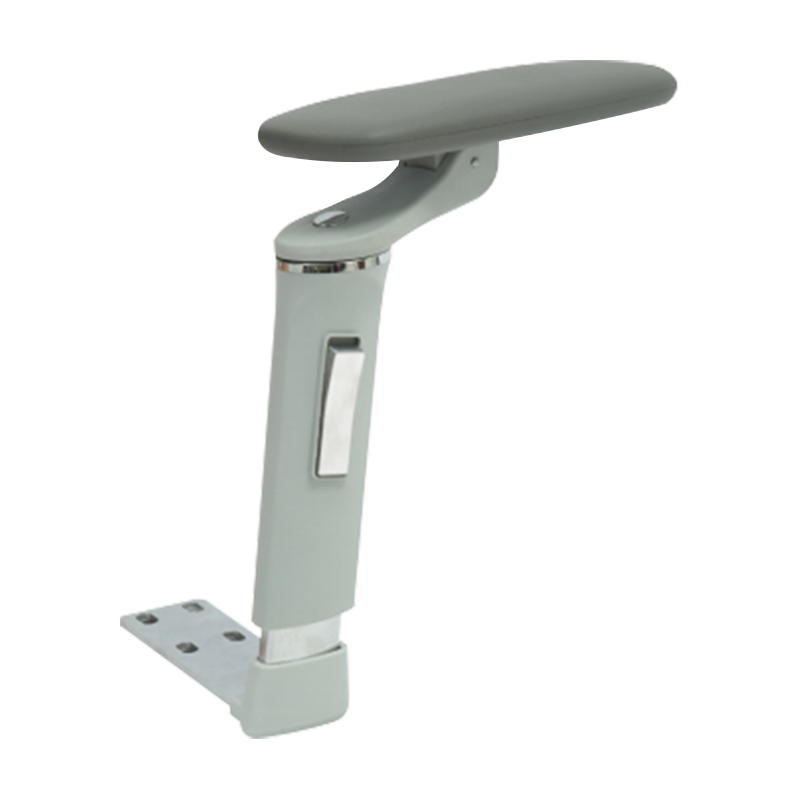
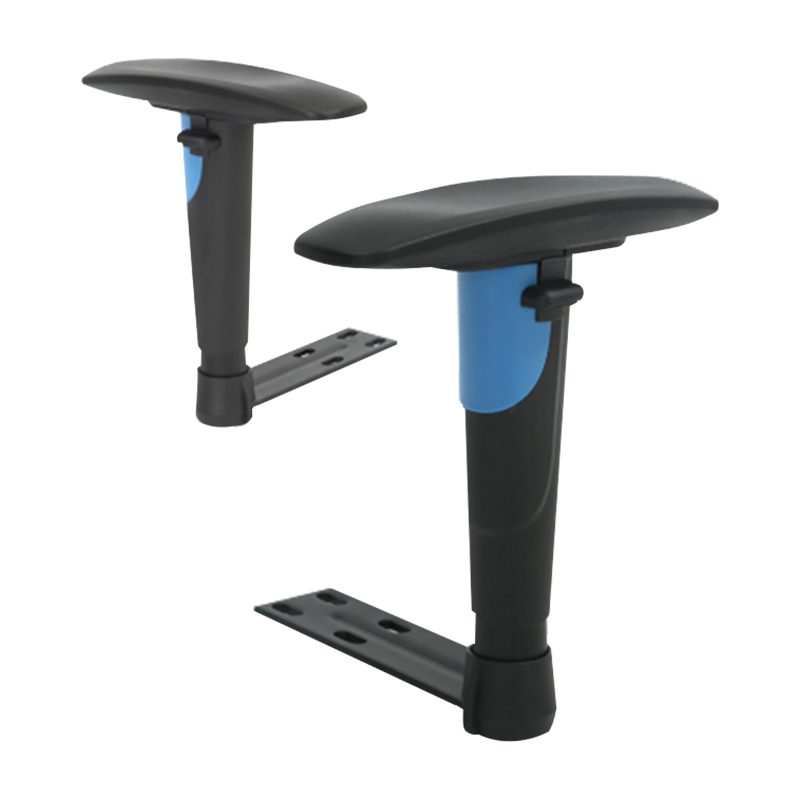
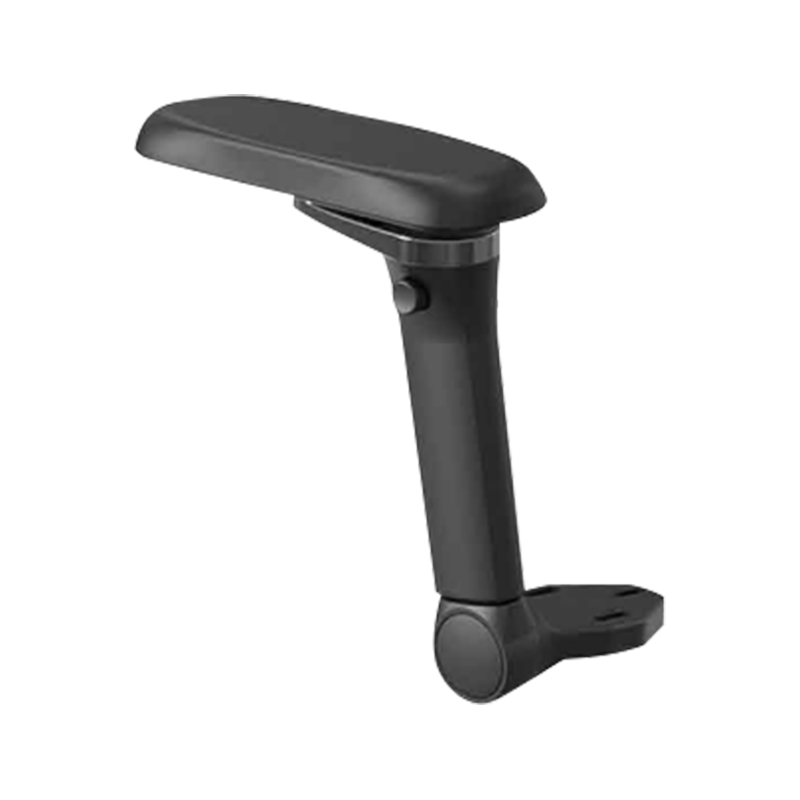
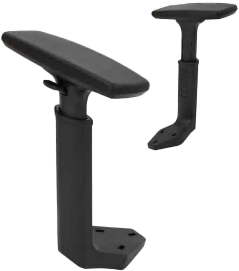
The 2D (Two-Dimensional) configuration is defined by its ability to provide vertical height adjustment and horizontal or depth movement. When analyzing how 2d adjustable armrests improve ergonomics, the focus lies on the support of the forearm to mitigate strain on the trapezius and deltoid muscles. A standard 2d adjustable armrest height range typically spans 60mm to 100mm, allowing users to align their elbows at a 90-degree angle relative to the desk surface. This mechanical flexibility is essential for accommodating diverse anthropometric data in a modern workforce. Furthermore, the benefits of 2d armrests in task chairs include a reduced footprint compared to 4D variants, ensuring compatibility with standard workstation dimensions.
Material Composition and Structural Integrity Standards
The internal mechanism of a 2d adjustable armrest often utilizes glass-fiber reinforced nylon (PA66+GF30) for the support column to ensure high tensile strength and creep resistance. For the contact surface, manufacturers typically specify a Soft PU (Polyurethane) pad with a specific Shore A hardness. This PU pad durability for armrests is tested according to BIFMA X5.1 standards, ensuring the material does not crack or undergo permanent deformation after 60,000 cycles of pressure. When comparing 2d vs 3d armrest cost-benefit ratios, the 2D model offers the same load-bearing capacity and material longevity as premium tiers but with fewer mechanical failure points, significantly reducing long-term maintenance overhead.
Industrial Manufacturing and Assembly Precision
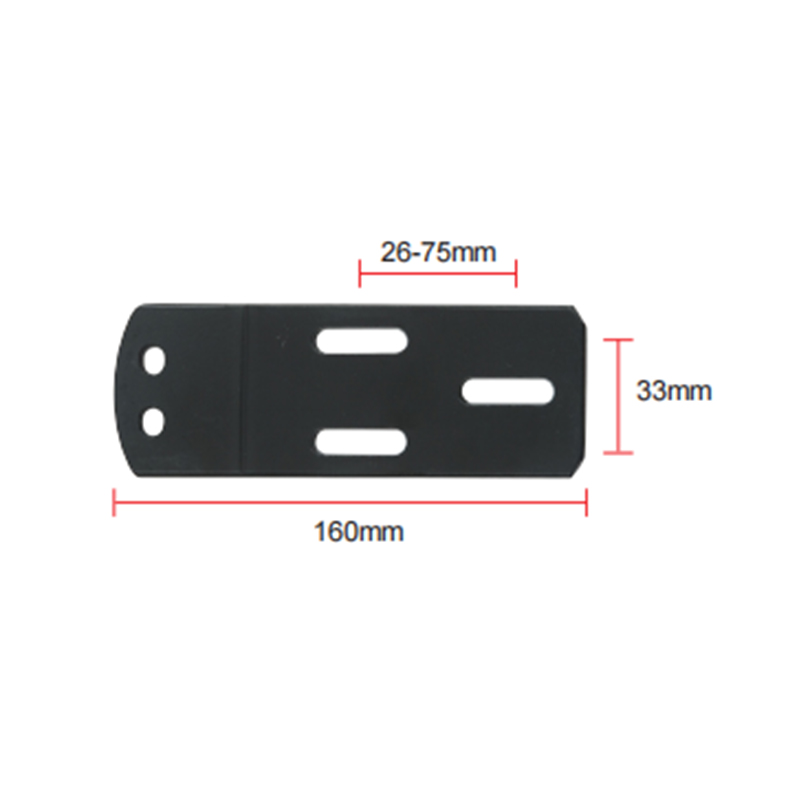
Precision in the adjustable armrest locking mechanism is critical for preventing "wobble" or unintentional height drops. Anji Xielong Furniture Co., Ltd. employs automated injection molding and assembly lines to maintain tight tolerances in the sliding tracks. A 2d adjustable armrest for office chairs must demonstrate smooth actuation throughout its travel path. The 2d armrest mounting plate specifications must follow industry-standard hole patterns (e.g., 40mm x 40mm or 100mm x 40mm) to allow for seamless integration across various seat pan designs. This interchangeability makes the 2D system a preferred choice for high-volume B2B contract furniture projects.
Comparative Analysis of Armrest Functionality Tiers
To justify the selection of 2D systems, engineers evaluate the mechanical utility against the total cost of ownership. While 1D models only provide height adjustment, 2D models add a crucial secondary movement (sliding or rotating) that addresses the ergonomic needs of office workers without the price volatility of complex 4D components.
| Feature Metric |
1D Adjustable Armrest |
2D Adjustable Armrest |
3D/4D Adjustable Armrest |
| Vertical Stroke (mm) |
60 - 80 |
70 - 100 |
70 - 120 |
| Horizontal Adjustment |
None |
Slide or Pivot |
Slide, Pivot, & Width |
| BIFMA Load Rating |
250 lbs |
250 lbs |
250 lbs |
| Maintenance Complexity |
Low |
Low |
Medium-High |
| Standard Materials |
PP / Nylon |
Nylon + GF / PU |
Aluminium / Nylon / PU |
Performance Testing and Lifecycle Reliability
Every 2d adjustable armrest produced must undergo salt spray testing for any metal fasteners and static load testing for the arm caps. Understanding why 2d armrests are the gold standard for task chairs involves looking at the failure rates; the simplified two-axis movement reduces the number of springs and latches that can wear out over time. Adhering to ISO standards for adjustable office chair arms ensures that the product remains functional in high-traffic environments, such as 24/7 call centers. The objective is to provide long-lasting 2d adjustable armrests that maintain their tactile feedback and structural rigidity for a minimum 5-year operational lifecycle.
Hardcore Technical FAQ
Q1: What is the standard load-bearing capacity for a 2D adjustable armrest cap?
A1: According to BIFMA X5.1 Section 13, the armrest must withstand a vertical static load of 200 lbs (890 N) and a horizontal load of 100 lbs (445 N) without structural failure.
Q2: How does glass-fiber reinforcement affect the armrest column?
A2: Adding 30% glass fiber to nylon increases the flexural modulus and dimensional stability, ensuring the column does not bend or snap under lateral pressure.
Q3: Can 2D armrests be retrofitted to existing office chairs?
A3: Yes, provided the seat pan has a standard 3-hole or 4-hole mounting configuration. Most 2D armrests are designed with universal slotted holes for 10mm adjustments.
Q4: What is the optimal Shore A hardness for the PU arm pad?
A4: A Shore A hardness of 65-75 is considered optimal, providing a balance between soft-touch comfort and resistance to abrasion and cleaning chemicals.
Q5: Why is the 2D model more cost-effective for large-scale office fit-outs?
A5: It maximizes ergonomic ROI by providing the two most critical adjustments (height and depth/pivot) while keeping the Bill of Materials (BOM) cost significantly lower than 4D models.
Technical References
- ANSI/BIFMA X5.1-2017 - American National Standard For Office Furnishings - General Purpose Office Chairs.
- ISO 21015:2007 - Office furniture — Office work chairs — Test methods for the determination of stability, strength and durability.
- EN 1335-1:2020 - Office furniture - Office work chair - Part 1: Dimensions - Determination of dimensions.



 English
  Español
  عربى
عربى 


 Feel free to contact us