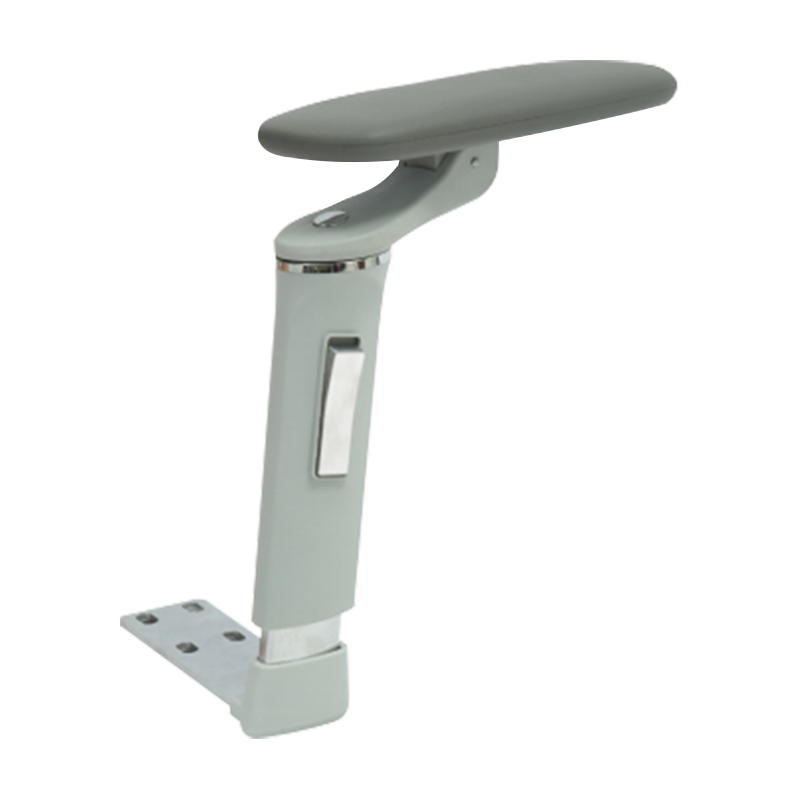
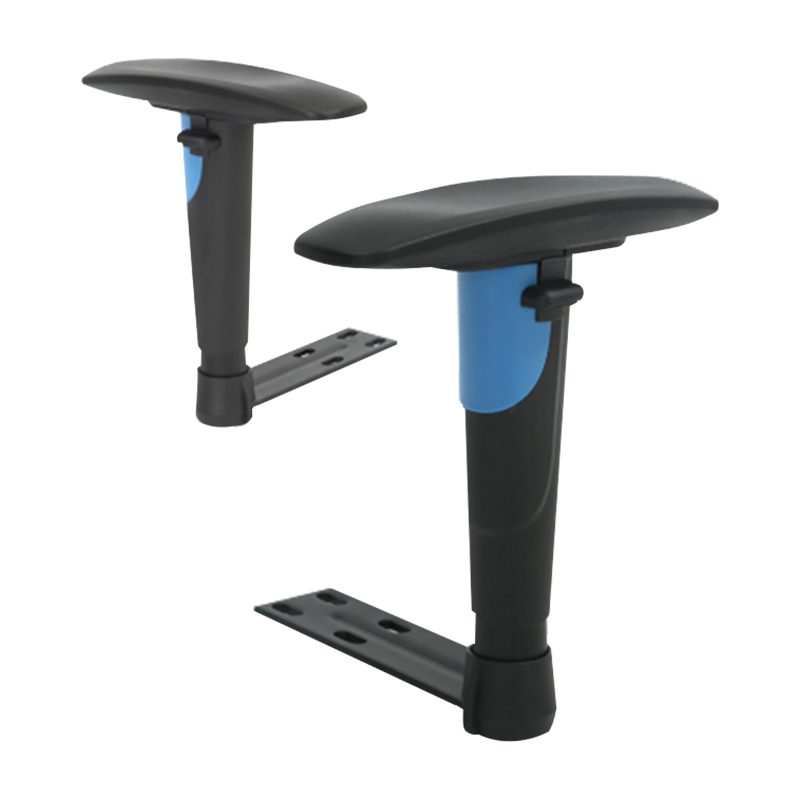
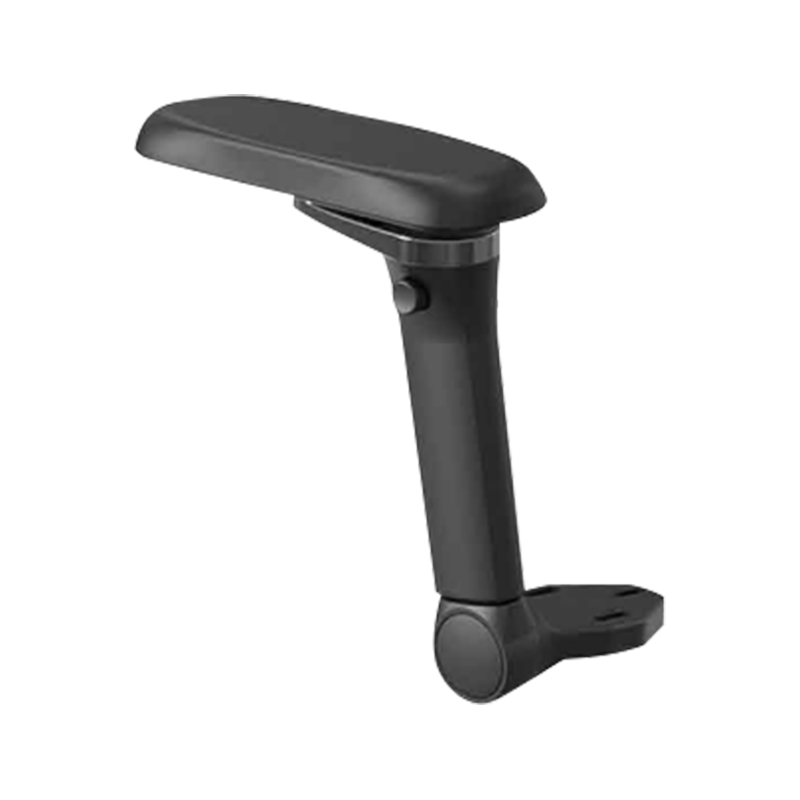
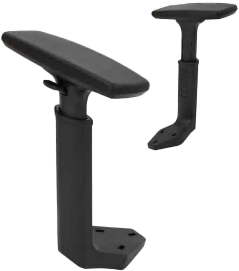
In the evolving landscape of ergonomic office furniture, the 5D armrest represents the pinnacle of multi-axial adjustment. Beyond standard height and width modifications, a true 5D system incorporates rotation, forward/backward sliding, and tilt-angle adjustments. For procurement specialists and furniture manufacturers, evaluating the mechanical integrity of these components is essential to ensure long-term reliability in high-intensity commercial environments.
Structural Analysis of Multi-Axial Adjustment Mechanisms
The core of 5D armrest durability testing lies in the precision of its internal ratchets and sliding tracks. High-quality units utilize glass-fiber reinforced polyamide (PA + GF) or die-cast aluminum alloys for the internal skeleton to prevent structural fatigue. When assessing how to test office chair armrest strength, engineers look for the absence of "mechanical play" or wobble in the primary pillar. A robust 5D armrest should maintain a tolerance of less than 2mm of lateral movement under a standard 10kg horizontal load.
Comparing different material compositions reveals significant variances in wear resistance. Anji Xielong Furniture Co., Ltd., established in 2019, focuses on the R&D and production of adjustable armrests, ensuring that material selection meets international BIFMA standards. The following data compares common structural materials used in high-performance armrests:
| Material Property |
Reinforced Polyamide (PA66-GF30) |
Standard Polypropylene (PP) |
| Tensile Strength (MPa) |
160 - 180 |
30 - 40 |
| Flexural Modulus (GPa) |
8.5 - 9.5 |
1.2 - 1.5 |
| Impact Resistance (kJ/m2) |
12 - 15 |
3 - 5 |
Surface Integrity and Pad Material Engineering
The tactile surface, often referred to as the "arm pad," must balance softness with chemical resistance. Evaluation of 5D armrest pad materials typically involves testing for hydrolysis resistance and shore hardness (typically Shore 60A to 70A). Integral skin polyurethane (PU) foam is the industry benchmark because it provides a seamless surface that resists perspiration and cleaning agents. For B2B 5D armrest sourcing, verifying the bonding strength between the PU skin and the internal plastic insert is critical to prevent delamination over time.
- Abrasion Resistance: Measured via Taber Abrasion tests to ensure the surface texture does not smooth out under repetitive friction.
- Compression Set: The ability of the pad to return to its original shape after prolonged pressure from the user's elbows.
- UV Stability: Ensuring the material does not become brittle or discolored when exposed to sunlight in office environments.
Internal Mechanism Longevity and Cycle Testing
The mechanical lifespan of a heavy duty 5D armrest is verified through rigorous cycle testing. According to BIFMA X5.1 standards, the height adjustment mechanism must withstand 60,000 cycles of operation without failure. Anji Xielong Furniture Co., Ltd. adheres to a "quality first" philosophy, integrating advanced testing protocols into their production of 5D armrest adjustable components. This ensures that the 5D armrest rotation mechanism reliability remains consistent even after years of use in dynamic office settings.
Evaluating Static and Dynamic Load Capacities
Static load testing involves applying a vertical force to the armrest to simulate a user leaning their full weight on the component during ingress or egress. A 5D armrest vs 4D armrest comparison often shows that 5D units require more complex internal locking pins to stabilize the additional tilt axis. For a professional grade 5D armrest, the vertical static load capacity should exceed 900N (approximately 91kg) without sustaining permanent deformation or fracture of the adjustment teeth.
Performance benchmarks differ significantly between standard consumer products and contract-grade accessories. The table below outlines the expected performance for professional-tier armrest systems:
- Horizontal Static Load450N to 500NLateral Stability
| Test Parameter |
Professional Grade Requirement |
Engineering Purpose |
| Vertical Static Load |
900N to 1100N |
Structural Safety |
| Cycle Durability |
60,000 to 100,000 cycles |
Adjustment Longevity |
Manufacturing Precision and Sourcing Criteria
The benefits of high-quality 5D armrests include improved ergonomic alignment and reduced musculoskeletal strain. However, achieving this requires high-precision injection molding. Any "flash" or "sink marks" on the component exterior are indicators of poor thermal management during the molding process, which often points to internal structural weaknesses. As a specialized manufacturer, Anji Xielong Furniture Co., Ltd. pursues higher quality products through constant innovation, providing efficient services to furniture colleagues worldwide to create win-win results.
What are the critical failure points in 5D armrests?
Most failures occur in the locking spring of the forward/backward slide or the pivot point of the rotation axis. Utilizing precision engineered 5D armrest parts with stainless steel springs and thickened pivot pins significantly reduces the return rate and enhances the end-user experience.
FAQ
What is the difference between a 4D and a 5D armrest?
While 4D armrests offer height, width, depth, and rotation, a 5D armrest adds a fifth dimension, typically an independent tilt angle or a synchronized lateral pivot that adapts to the user's arm angle during typing.
How can I check the build quality of an armrest without lab equipment?
Apply firm horizontal pressure to the armrest; if you hear excessive clicking or feel a "mushy" response in the locking mechanism, it indicates low-precision internal components.
Are PU arm pads better than PVC ones?
Yes, PU (Polyurethane) is superior for 5D armrests as it offers better elasticity, higher abrasion resistance, and is more environmentally friendly compared to PVC.
Do 5D armrests require regular maintenance?
High-quality 5D armrests are designed to be maintenance-free. However, keeping the sliding tracks free of dust and debris will ensure the adjustment remains smooth for a longer period.
What standards should I look for when sourcing 5D armrests?
Ensure the manufacturer provides test reports for BIFMA X5.1 (USA), EN 1335 (Europe), or equivalent national standards to guarantee mechanical safety and durability.
Technical References
- BIFMA X5.1-2017: American National Standard For Office Furnishings - General Purpose Office Chairs.
- ISO 21015: Office furniture — Office work chairs — Test methods for the determination of stability, strength and durability.
- Anji Xielong Furniture Co., Ltd. Internal Quality Control and Material Science Manual.



 English
  Español
  عربى
عربى 


 Feel free to contact us