In the field of professional ergonomic furniture, the spatial interaction between the seating unit and the work surface is a critical engineering constraint. A primary concern for procurement officers and workspace designers is whether an office chair 3d armrest can maintain its functional utility while fitting under a standard desk height for ergonomic chair seating, which typically ranges from 710 mm to 760 mm. Effective integration requires a deep understanding of the adjustable vertical stroke and the armrest depth adjustment for space saving.
Anji Xielong Furniture Co., Ltd., established in 2019, operates at the forefront of this niche, integrating R&D and production of adjustable armrest systems. As a specialized manufacturer of office furniture accessories, the company focuses on the precision of mechanical tolerances. Every product undergoes rigorous testing to ensure that the weight capacity of high-strength nylon armrests meets BIFMA standards, ensuring structural integrity in high-frequency commercial use.
Geometric Analysis: How to Measure Armrest Height for Desk Clearance
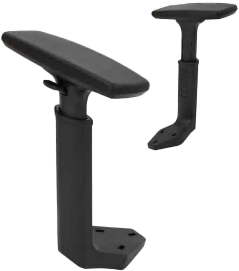
To determine if a chair will tuck under a workstation, engineers must calculate the "Minimum Clearance Height." This involves identifying how to measure armrest height for desk clearance by measuring from the floor to the highest point of the armrest pad at its lowest setting. For a 3D chair armrest, the vertical travel usually spans 60 mm to 100 mm. If the compressed seat height plus the minimum armrest elevation is less than 680 mm, it will clear most standard desks.
Mechanical Versatility: 3D vs 4D armrest adjustment differences in Ergonomics
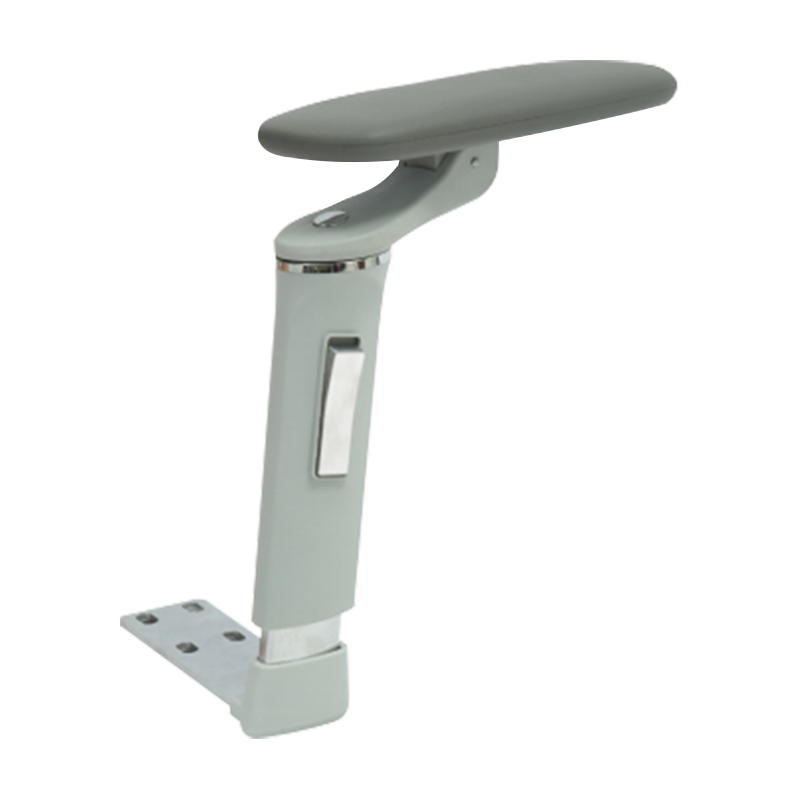
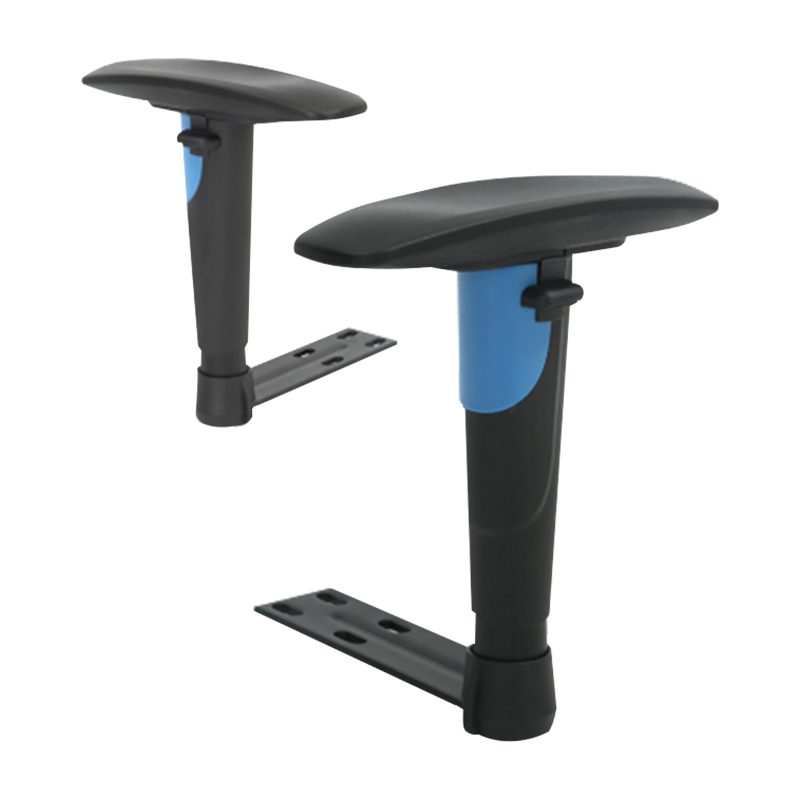
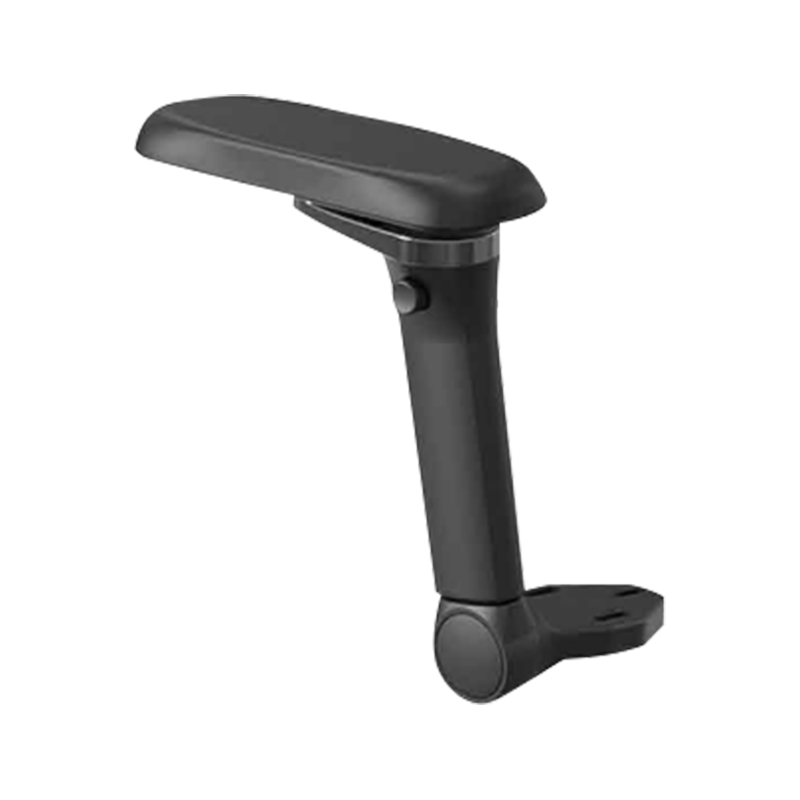
The technical distinction regarding 3D vs 4D armrest adjustment differences lies in the degrees of freedom. A 3D system typically offers height adjustment, depth (forward/backward) adjustment, and pivot (left/right rotation). A 4D system adds width adjustment. While 4D offers more customization, the 3D configuration is often favored in office chair accessories for small workspaces due to its narrower profile and reduced mechanical complexity, which minimizes the risk of pivot-point fatigue.
Weight Capacity of High-Strength Nylon Armrests and Material Longevity
Material science plays a pivotal role in the durability of these components. Anji Xielong utilizes glass-fiber reinforced nylon (PA+GF) to ensure the weight capacity of high-strength nylon armrests can withstand vertical loads exceeding 113 kg without plastic deformation. For the contact surface, the best armrest material for tactile comfort and durability is typically a high-density Integral Skin Polyurethane (PU) foam, which offers an Shore A hardness of 65-75, providing both resilience and a Ra surface finish that is easy to sanitize.
Ergonomic Standards and Biomechanical Impact
Maintaining the ergonomic office chair armrest height range is essential to ensure that the user's elbows are supported at a 90-degree to 100-degree angle. Correct support reduces the impact of adjustable armrests on repetitive strain injury (RSI) by offloading weight from the trapezius and deltoid muscles. In modern "hot-desking" environments, the ability to quickly lower the armrest for under-desk storage is a vital feature for facility management.
| Adjustment Type |
Mechanical Range |
Functional Benefit |
| Vertical Stroke |
60 mm - 100 mm |
Alignment with varying torso lengths |
| Depth (Slide) |
40 mm - 50 mm |
Accommodation for proximity to desk edge |
| Horizontal Pivot |
+/- 20 degrees |
Support during typing and mouse usage |
| Load Resistance |
BIFMA X5.1 Section 13 |
Prevents structural failure under lateral force |
Universal Integration and Installation Protocols
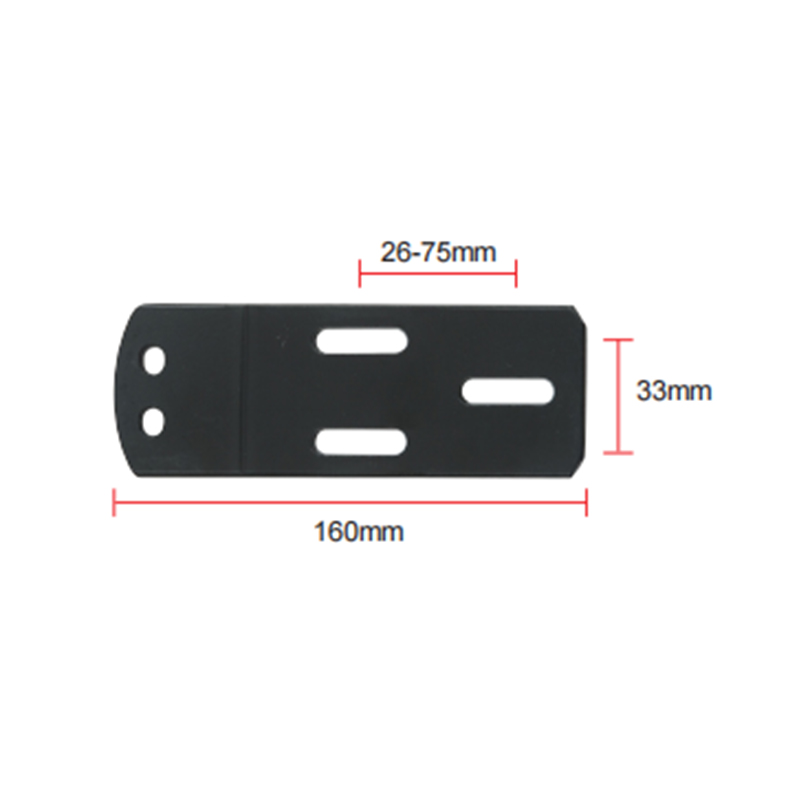
For manufacturers looking to upgrade existing chair lines, identifying universal mounting patterns for chair armrests is the first step. The industry standard often follows a three-hole or four-hole triangular or rectangular configuration, typically using M6 or M8 bolts with a tensile strength class of 8.8. Anji Xielong Furniture Co., Ltd. designs its adjustable armrests to be compatible with a wide array of seat pan substrates, allowing for a win-win situation in global furniture supply chains.
Frequently Asked Questions
What is the average thickness of a 3D armrest pad?
Standard PU pads are typically 25 mm to 35 mm thick, designed to provide adequate cushioning while maintaining a low profile for desk clearance.
Can 3D armrests be retrofitted to any office chair?
Retrofitting depends on the universal mounting patterns for chair armrests on the seat pan. It is vital to check the center-to-center hole distance before procurement.
Is nylon or steel better for armrest internal structures?
High-strength reinforced nylon is generally preferred for its weight-to-strength ratio and corrosion resistance, whereas steel is used for the internal vertical support bars to ensure maximum rigidity.
Does a 3D armrest help with carpal tunnel syndrome?
By maintaining the wrist in a neutral position relative to the desk surface, an adjustable armrest significantly reduces the risk factors associated with carpal tunnel and other RSI conditions.
What is the standard warranty for industrial-grade armrests?
Most commercial-grade armrests, like those from Anji Xielong, are designed for a 5 to 10-year service life under normal 8-hour daily usage.
Technical References
1. ANSI/BIFMA X5.1-2017: American National Standard For Office Furnishings - General Purpose Office Chairs.
2. ISO 9241-5: Ergonomic requirements for office work with visual display terminals (VDTs) - Part 5: Workstation layout and postural requirements.
3. EN 1335-1: Office furniture - Office work chair - Part 1: Dimensions - Determination of dimensions.



 English
  Español
  عربى
عربى 


 Feel free to contact us