


 English
  Español
  عربى
عربى 
Beyond Four Dimensions: Technical Analysis of 5D Armrest Adjustment Mechanisms and Precision
Content
- 1 Defining the Fifth Dimension: 5D Armrest Adjustment Mechanisms Explained
- 2 Ensuring Stability: The Precision Locking System for 5D Armrest
- 3 Functional Superiority: The Difference Between 4D and 5D Armrests
- 4 B2B Procurement Focus: Key Technical Specifications for 5D Armrest
- 5 Anji Xielong Furniture Co., Ltd.: Commitment to Armrest Innovation
- 6 Frequently Asked Questions (FAQ)
- 6.1 1. What specific function constitutes the fifth dimension in a 5D Armrest?
- 6.2 2. How do suppliers ensure the stability of the **5D Armrest** once adjusted?
- 6.3 3. Is there a significant Difference between 4D and 5D armrests for a standard desk user?
- 6.4 4. What are the key Technical specifications for 5D armrest that B2B buyers should check?
- 6.5 5. Does the added complexity of 5D features compromise the Ergonomics of 5D armrest functionality?
In the highly competitive ergonomic office furniture market, the **5D Armrest** represents a significant step forward in user customization and postural support. For B2B procurement and chair manufacturers, understanding the technical specifications of the **5D Armrest** is paramount. This analysis details the five axes of adjustment and the engineering required to maintain stability and high precision across these complex movements, focusing on the core of 5D armrest adjustment mechanisms.
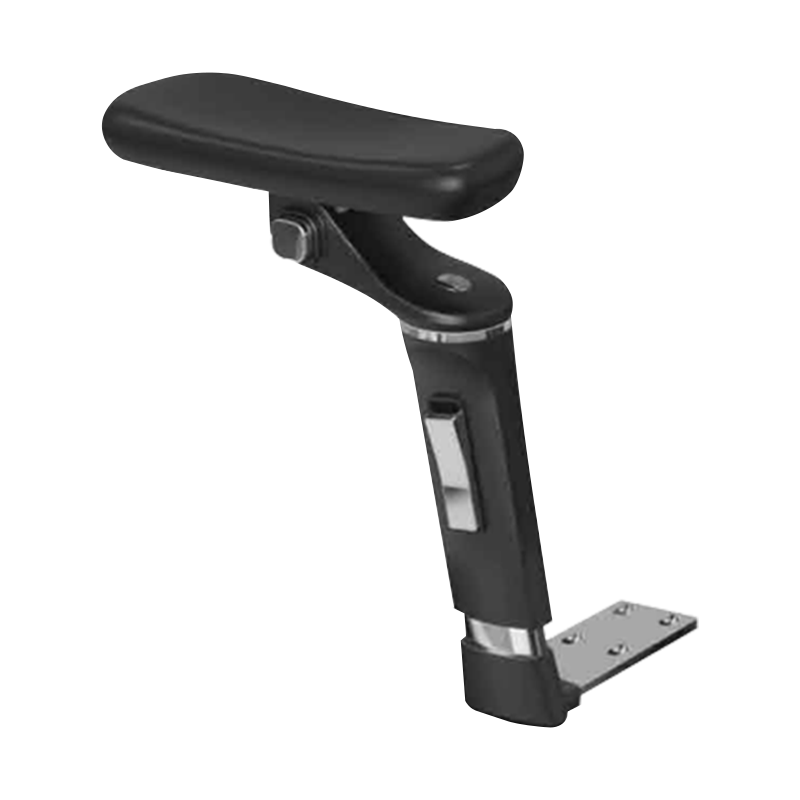
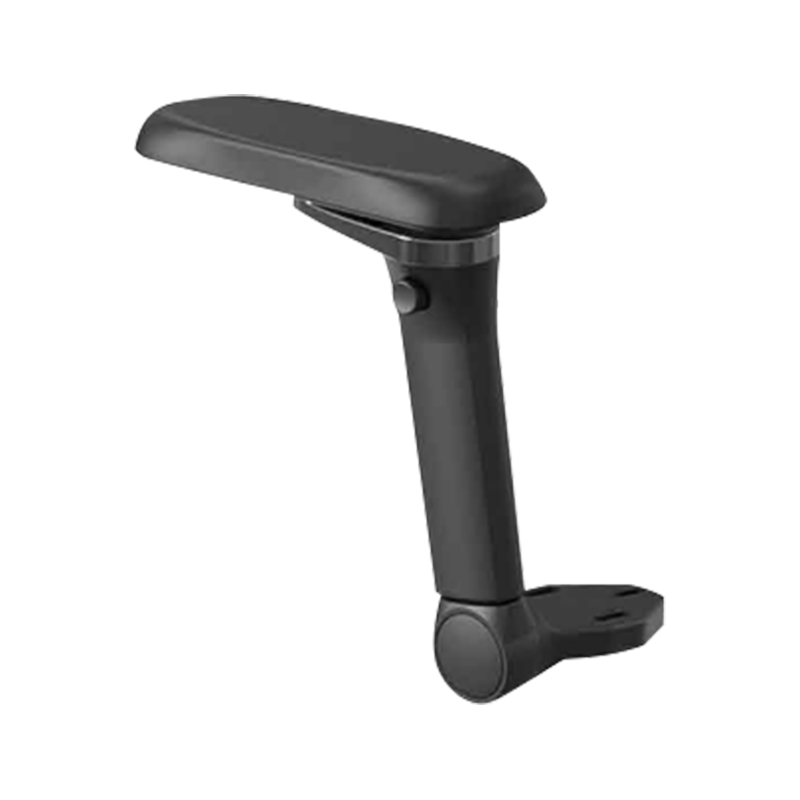
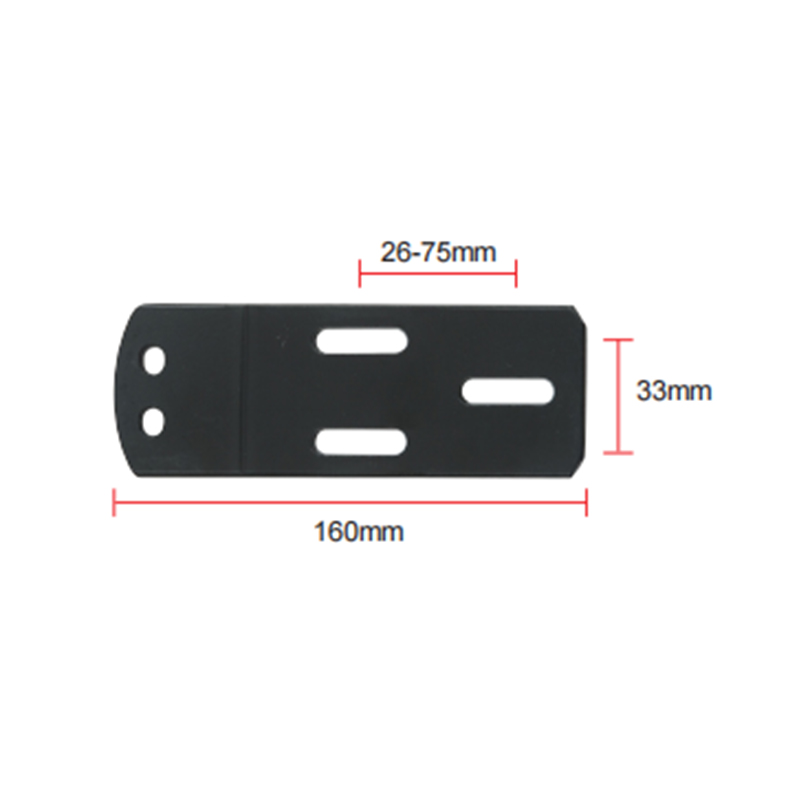
309 Strong Nylon PU Adjustable Folding 5D Armrests, Can Rotate Inside and Outside
Defining the Fifth Dimension: 5D Armrest Adjustment Mechanisms Explained
The "D" in 5D refers to the independent planes of movement available to the user, allowing the armrest pad to perfectly align with the natural posture of the forearm and shoulder, regardless of the task.
The Core 4D Dimensions (Height, Width, Depth, Pivot)
The foundation of the 5D design lies in the established 4D capabilities:
- **1. Height Adjustment (Vertical):** Allows the user to match the armrest height to the desk height, achieving a 90-degree elbow bend.
- **2. Depth Adjustment (Forward/Backward):** Necessary for accommodating users of different sizes and optimizing elbow positioning relative to the chair back.
- **3. Width Adjustment (Lateral):** Enables spacing the armrests to match shoulder width, preventing excessive abduction or adduction.
- **4. Pivot Adjustment (Horizontal Angle):** Allows the armrest pad to angle inward (for phone use/typing) or outward (for relaxed seating).
The Essential Fifth Dimension and Its Ergonomic Value
The fifth dimension elevates the system beyond standard adjustability, enhancing the Ergonomics of 5D armrest functionality:
- **5. Angular Tilt/Rotation (Vertical Angle):** This dimension allows the entire armrest pad to tilt up or down, offering support for unique positions, such as supporting the forearm when holding a tablet or slightly leaning back for reading. This specific feature is the key Difference between 4D and 5D armrests and provides crucial support for the wrist and elbow in dynamic postures.
Ensuring Stability: The Precision Locking System for 5D Armrest
The greater the number of axes, the more complex the locking challenge becomes. The value of a **5D Armrest** is entirely dependent on its ability to hold a set position under sustained load, thus requiring a robust Precision locking system for 5D armrest.
Ratchet Mechanisms and Detent Systems for Vertical and Horizontal Lock
- **Vertical (Height) Lock:** This typically employs a multi-tooth ratchet mechanism that engages a high-tensile steel pin. The fine-pitch ratcheting ensures precise vertical steps (often 10mm or less) and secure load-bearing capacity.
- **Horizontal (Pivot/Depth) Lock:** These utilize spring-loaded detent systems. The detents must be deep enough to provide a definite 'click' but smooth enough to allow for easy repositioning without excessive effort.
Torque and Load Testing for Reliability (Preventing Drift)
Reliable armrests must resist 'drift'—involuntary movement caused by lateral or downward load pressure. Technical specifications require subjecting the mechanism to repeated load cycles (e.g., BIFMA standards) to test the mechanical integrity of the lock.
Locking Mechanism Comparison Table
| Adjustment Axis | Preferred Locking Mechanism | Critical Performance Metric |
|---|---|---|
| Height (Vertical) | High-Pitch Ratchet Lock | Load Capacity (Resistance to Slippage) |
| Depth / Width (Horizontal) | Spring-Loaded Detent | Holding Force and Cycle Durability |
| Angle (Pivot/Tilt) | Friction Brake or Geared Detent | Torque Resistance (Preventing Unintended Drift) |
Functional Superiority: The Difference Between 4D and 5D Armrests
Ergonomic Impact of the Added Dimension
The main Difference between 4D and 5D armrests is the ability to achieve full forearm neutrality when the chair is reclined. In 4D systems, the forearm pad remains flat, forcing the wrist into an uncomfortable position when the user leans back. The 5D tilt function allows the arm to maintain an optimal, neutral position relative to gravity, significantly reducing tension in the shoulder and neck.
Ergonomics of 5D armrest functionality Across Task Types
The complete 5D range provides specific benefits for diverse tasks:
- **Typing:** Precise height, depth, and pivot lock ensures wrist and elbow are aligned with the keyboard.
- **Tablet/Phone Use:** The added tilt dimension supports the forearm at an inclined angle, preventing the shoulder from shrugging to maintain the position.
- **Reclining:** The tilt adjustment compensates for the change in body angle, maximizing comfort and support.
4D vs. 5D Functionality Comparison Table
| Feature | 4D Armrest | 5D Armrest (Advanced Ergonomics) |
|---|---|---|
| Tilt/Vertical Angle | No (Fixed Horizontal Pad) | Yes (Adjustable Tilt/Rotation) |
| Support in Recline | Limited, requires manual repositioning. | Optimized, continuous support via tilt function. |
| Target User | General Office Use | High-Performance, Dynamic Workspace |
B2B Procurement Focus: Key Technical Specifications for 5D Armrest
Material Selection for Durability and Smooth Action
The structural integrity hinges on quality materials. Technical specifications should verify the use of reinforced nylon or aluminum alloy for the core mechanism. The Technical specifications for 5D armrest must include the durability testing cycles (e.g., 50,000 cycles for all axes) to guarantee product longevity and a smooth user experience, minimizing warranty claims.
Anji Xielong Furniture Co., Ltd.: Commitment to Armrest Innovation
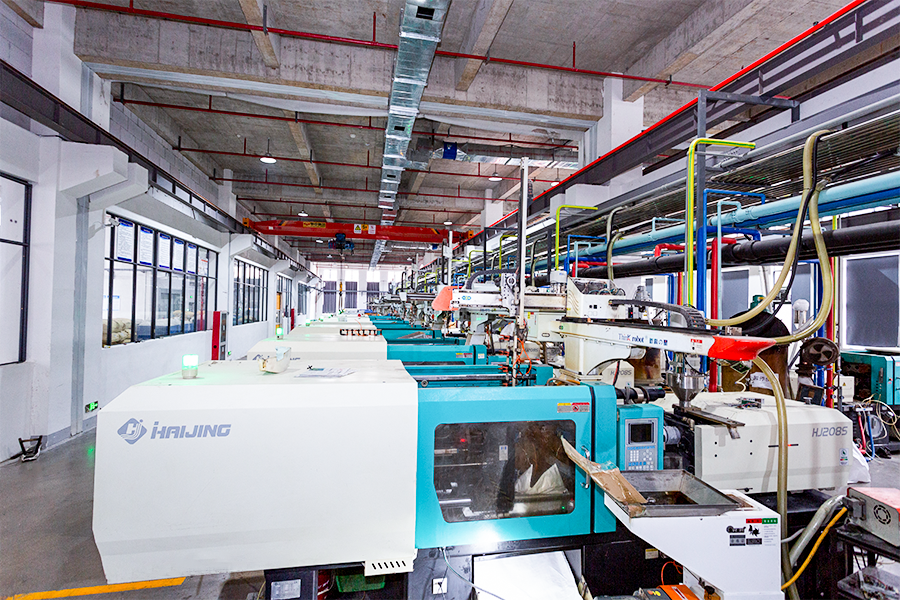
At Anji Xielong Furniture Co., Ltd., established in 2019, we specialize in the R&D, production, and sales of adjustable armrests for office chairs. As a key supplier and shaper of main accessories business, we understand that high-quality products, such as the advanced **5D Armrest**, require relentless innovation and precision engineering. Our company adheres to the principle of "Quality first, customers first," ensuring every **5D Armrest** mechanism is built for superior reliability and adjustment precision, meeting the critical demands of our global partners. We welcome sincere cooperation with colleagues in the furniture field to create a win-win situation through continuous pursuit of higher quality products.
Frequently Asked Questions (FAQ)
1. What specific function constitutes the fifth dimension in a 5D Armrest?
The fifth dimension is typically the vertical angle or tilt adjustment of the armrest pad, which allows the user to tilt the pad up or down, providing support for the elbow and wrist in reclined or phone-holding postures.
2. How do suppliers ensure the stability of the **5D Armrest** once adjusted?
Stability is ensured through a Precision locking system for 5D armrest that utilizes high-strength ratchet mechanisms for vertical movement and specialized spring-loaded detents or friction brakes for rotational and horizontal adjustments.
3. Is there a significant Difference between 4D and 5D armrests for a standard desk user?
While 4D is sufficient for standard typing, the 5D tilt function offers superior support during dynamic tasks like reclining, reading, or using a tablet, making the upgrade worthwhile for high-performance ergonomic seating.
4. What are the key Technical specifications for 5D armrest that B2B buyers should check?
Buyers should check the specific adjustment range (in mm/degrees), the structural material (e.g., aluminum vs. reinforced nylon), and the certified durability cycle testing results for all **5D armrest adjustment mechanisms**.
5. Does the added complexity of 5D features compromise the Ergonomics of 5D armrest functionality?
No, the complexity is designed to enhance ergonomics. If the mechanisms are well-engineered and utilize a robust Precision locking system for 5D armrest, the added adjustment range allows for a perfect fit for a wider range of body types and tasks, improving overall user comfort.


 Feel free to contact us

- Product Fast Links
- Office Chair
- Gaming Chair
- Ergonomic Chair Accessories
- Contact Information
- Tangpu Industrial Park, Anji County, Huzhou City, Zhejiang Province, China
- [email protected]
- +86-13567973388

