


 English
  Español
  عربى
عربى 
Decoding the Mechanical Movements and Ergonomic Impact of a 2D Adjustable Armrest
Content
- 1 Technical Definition: What Constitutes a 2D Adjustable Armrest?
- 2 The Kinetic Logic of the Second Dimension: Rotation vs. Width Adjustment
- 3 Biomechanical Advantages: Ergonomic 2d adjustable armrest benefits for Modern Workspaces
- 4 Comparative Engineering: 2d adjustable armrest vs 3d armrest
- 5 Manufacturing Standards and B2B Procurement: Wholesale 2d adjustable armrest components
- 6 Conclusion: Integrating High-Quality Components with Anji Xielong Furniture
- 7 Frequently Asked Questions (FAQ)
In the evolving landscape of office furniture engineering, the 2D adjustable armrest represents a fundamental pivot toward user-centric design. While fixed armrests provide static support, a two-dimensional system introduces mechanical adaptability essential for mitigating musculoskeletal strain. At Anji Xielong Furniture Co., Ltd., established in 2019, we specialize in the R&D and production of high-quality armrest solutions, prioritizing the synergy between robust mechanical performance and superior service for global furniture colleagues.
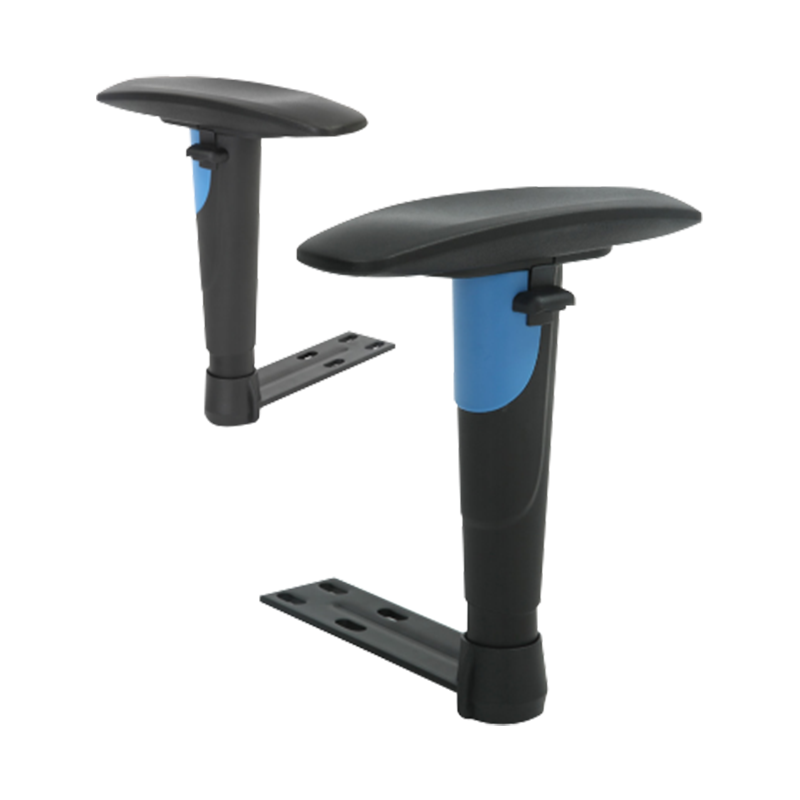
Technical Definition: What Constitutes a 2D Adjustable Armrest?
A 2D adjustable armrest for office chair applications is defined by its ability to move along two distinct axes. Unlike 1D models that only offer vertical movement, the 2D variant adds a second layer of customization—typically rotation or width adjustment—to accommodate various body types and task-related postures. From a manufacturing perspective, these components must withstand repetitive stress cycles while maintaining smooth actuation.
Vertical Displacement: The Primary Axis of Movement
The height adjustment is the cornerstone of any ergonomic seating solution. It allows the user to align the armrest with the desk surface, reducing the load on the trapezius muscles. While standard armrests offer limited mobility, a professional-grade 2D adjustable armrest height adjustment range usually spans between 60mm and 100mm to ensure compatibility with the 5th to 95th percentile of the workforce.
| Adjustment Feature | Static/Fixed Armrests | 2D Adjustable Systems |
| Vertical Adaptability | Zero displacement; height is preset during assembly. | Multi-point locking mechanisms allowing for precise height alignment. |
| User Shoulder Relief | Minimal; often leads to "shrugging" or leaning. | High; optimizes the angle of the elbow to approximately 90 degrees. |
The Kinetic Logic of the Second Dimension: Rotation vs. Width Adjustment
The "second dimension" in a 2D adjustable armrest often refers to either pivoting (rotation) or lateral width adjustment. Technical breakthroughs in 2024 have seen the integration of glass-fiber reinforced plastics into the internal ratcheting systems, allowing for more fluid transitions between positions. According to the BIFMA (Business and Institutional Furniture Manufacturers Association) X5.1-2017(R2022) standards, armrests must sustain specific force applications to ensure long-term structural integrity in commercial environments.
Source: BIFMA Standards for Office Seating and Components
Analyzing Lateral and Pivot Mechanics in 2D Systems
When engineers design for wholesale 2d adjustable armrest components, the focus is often on the internal spring-loaded or friction-based locking units. Pivot movements allow users to angle their arms inward for typing or outward for relaxed postures, directly impacting the reduction of ulnar deviation risks.
Biomechanical Advantages: Ergonomic 2d adjustable armrest benefits for Modern Workspaces
The ergonomic 2d adjustable armrest benefits extend beyond simple comfort. By providing a stable platform for the forearms, these components neutralize the weight of the arms, which accounts for roughly 10% of total body weight. This redirection of force prevents chronic tension in the neck and upper back. Recent ergonomic research emphasizes that adjustable interfaces are crucial for decreasing the incidence of Carpal Tunnel Syndrome in high-intensity computer users.
Source: ISO 9241-5: Ergonomic Requirements for Office Work with Visual Display Terminals
Comparative Engineering: 2d adjustable armrest vs 3d armrest
Choosing between different tiers of adjustability is a critical decision for B2B procurement managers. While a 2d adjustable armrest vs 3d armrest comparison reveals that 3D models add depth adjustment (sliding forward and backward), the 2D model remains the industry "sweet spot" for cost-to-performance ratio, providing essential support without the mechanical complexity of higher-tier variants.
| Technical Metric | 2D Adjustable Armrest | 3D Adjustable Armrest |
| Degrees of Freedom | Two (Height + Pivot or Width) | Three (Height + Pivot + Depth) |
| Mechanical Complexity | Moderate; lower failure rate in high-traffic offices. | Higher; requires more precision internal tracks. |
| Price Point | Optimized for bulk manufacturing and standard ergonomic lines. | Premium pricing for executive or high-end task chairs. |
Manufacturing Standards and B2B Procurement: Wholesale 2d adjustable armrest components
For furniture manufacturers, sourcing wholesale 2d adjustable armrest components requires a focus on material science. Anji Xielong Furniture Co., Ltd. employs rigorous testing phases to ensure that every armrest meets the "Quality First" mandate. Our innovation focuses on high-load capacity and tactile comfort, using PU (Polyurethane) padding that resists deformation over years of use.
Conclusion: Integrating High-Quality Components with Anji Xielong Furniture
The 2D adjustable armrest is an indispensable component of the modern ergonomic chair. By balancing height precision and lateral flexibility, it provides the necessary support for diverse professional tasks. As a dedicated shaper of the main accessories business, Anji Xielong Furniture Co., Ltd. continues to innovate, welcoming sincere cooperation with global partners to create win-win solutions through high-quality R&D and manufacturing excellence.
Frequently Asked Questions (FAQ)
- What is the standard 2d adjustable armrest height adjustment range? Most professional models offer a range of 60mm to 100mm to accommodate a wide variety of desk heights and user statures.
- How does a 2D armrest improve typing posture? By utilizing the pivot or width dimension, users can bring their elbows closer to their torso, aligning the wrists and reducing strain during keyboard use.
- What are the key ergonomic 2d adjustable armrest benefits compared to fixed arms? The primary benefit is the reduction of musculoskeletal disorders by allowing the chair to adapt to the user rather than forcing the user to adapt to the chair.
- Why should I choose a 2d adjustable armrest vs 3d armrest for a large-scale office project? 2D armrests offer a more durable and cost-effective solution while still providing the most critical ergonomic adjustments required for general office tasks.
- Where can I source reliable wholesale 2d adjustable armrest components? Manufacturers like Anji Xielong Furniture provide specialized R&D and production services specifically tailored for high-volume B2B furniture needs.


 Feel free to contact us

- Product Fast Links
- Office Chair
- Gaming Chair
- Ergonomic Chair Accessories
- Contact Information
- Tangpu Industrial Park, Anji County, Huzhou City, Zhejiang Province, China
- [email protected]
- +86-13567973388

